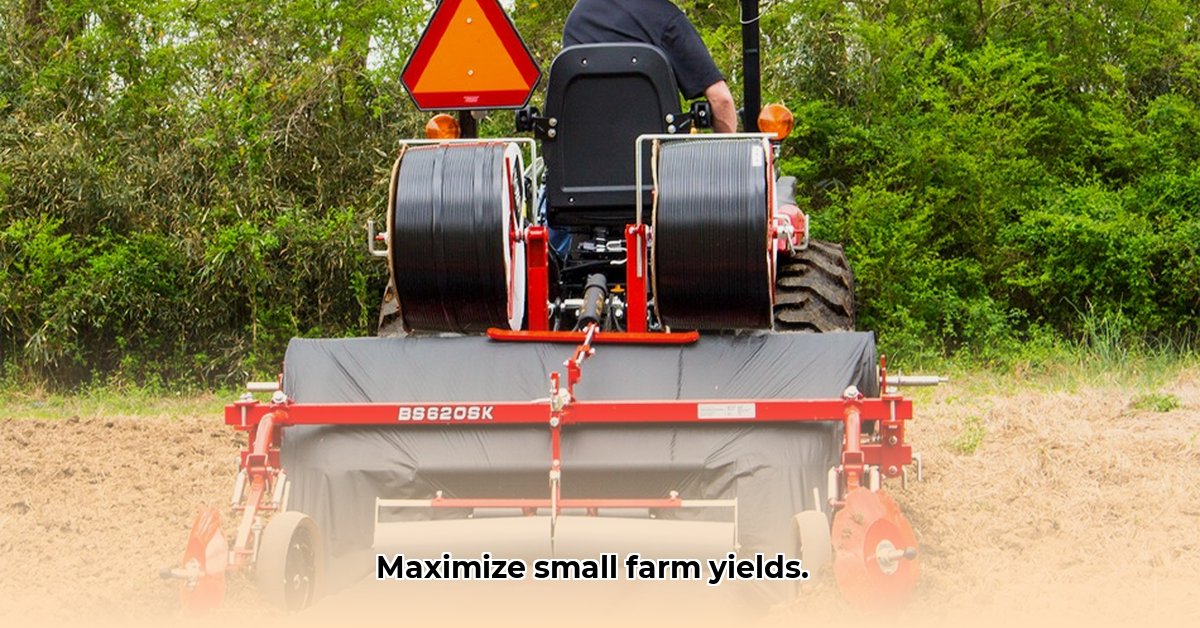
Farm Implements for Compact Tractors: Maximizing Your Farm's Potential
Running a small farm demands efficiency. Every minute counts, and the right tools are crucial for maximizing productivity. Compact tractors, paired with the appropriate attachments, become invaluable assets, offering versatility and efficiency. This guide helps you select the perfect implements to boost your farm's productivity and sustainability while saving time and money. For even more lifting power, consider a backhoe attachment.
Choosing the Right Implements: A Step-by-Step Guide
Selecting the best implements for your compact tractor hinges on understanding your specific farming needs and challenges. What are your biggest obstacles? Do you have rocky terrain, vast fields, or a combination? Let’s break down the process:
Step 1: Assess Your Farming Needs:
- Soil Preparation: Do you need to till your soil for optimal seedbeds? Or perhaps a box blade (a versatile attachment used for leveling land and smoothing surfaces) is better suited to your land? A tiller excels at mixing and breaking up soil clumps, but rocky or exceptionally hard soil may require a more robust solution. What type of soil do you have?
- Harvesting: For mowing, rotary mowers are efficient for uneven terrain; they’re durable and handle obstacles well. Flail mowers, however, are ideal for denser vegetation like thick weeds or tough grasses. The best choice depends on the crops you cultivate and your land's character. What are your primary crops?
- Material Handling: A front-end loader is indispensable for moving materials—manure, feed, harvested crops—with ease. It provides the lifting power of an extra set of strong hands. Do you regularly move large quantities of materials?
- Specialized Tasks: Consider any unique tasks. Need to dig post holes? A post hole digger is essential. Need to weed between rows of plants? A cultivator carefully removes weeds without damaging crops. Do you need to deal with snow removal in winter? Adding a snow blower to your inventory is essential in snowy climates.
Step 2: Budget Wisely and Plan for the Future:
- Initial Investment: Some implements, such as front-end loaders, are more expensive. Leasing can be a cost-effective alternative, especially for seasonal use. What's your budget for new equipment?
- Maintenance Costs: Factor in regular maintenance and potential repairs. Proper maintenance ensures longevity and optimal performance, minimizing downtime. What's your plan for routine maintenance?
- Future-Proofing: Anticipate your farm's evolution. Will your needs change? Choose versatile implements that adapt to future requirements, preventing unnecessary future purchases. How do you anticipate your farming practices changing?
Step 3: Matching Implements to Your Tractor:
- Hydraulic Capacity: Ensure your tractor has sufficient hydraulic power (horsepower) for the chosen attachment. Overloading can damage both the implement and your tractor. Consult your tractor's manual for its hydraulic capacity. What is your tractor's hydraulic capacity?
- 3-Point Hitch Compatibility: Most compact tractors use a 3-point hitch system for rear attachments. Verify that your selected implement is compatible with your tractor’s hitch. Is your tractor equipped with a 3-point hitch?
- Weight Limits: Never exceed your tractor's weight capacity; this is crucial for safety and stability. Overloading can lead to equipment malfunctions, rollovers, and injuries. What is your tractor's maximum weight capacity?
Popular Compact Tractor Implements: A Quick Overview
The following table summarizes common implements and their applications:
| Implement | Main Use | Advantages | Disadvantages | Soil Impact |
|---|---|---|---|---|
| Rotary Tiller | Soil preparation for planting | Efficient soil mixing, good seedbeds | Can compact soil if overused, high fuel consumption | High (if overused) |
| Finish Mower | Mowing grass and low vegetation | Smooth cut, low maintenance | Less effective in thick or tall vegetation | Low |
| Box Blade | Land leveling, scraping, light grading | Versatile, simple operation | Not for heavy grading jobs | Medium |
| Front-End Loader | Material handling | High lifting capacity, versatile | High initial cost, potential for soil damage | Low |
| Post Hole Digger | Digging holes for posts | Efficient, labor-saving | Limited to post-hole digging | Low |
| Cultivator | Weeding between crop rows | Precise weed control, plant protection | Requires careful operation, less effective in dense weeds | Low to Medium |
Tips for Maximizing Implement Performance
- Regular Maintenance: Clean and lubricate attachments regularly to increase their lifespan. This preventive maintenance saves money and minimizes future issues. How often do you plan to maintain your implements?
- Safe Operation: Always adhere to manufacturer's instructions and safety guidelines. Prioritize safety for both yourself and your equipment. What safety measures will you implement?
- Proper Storage: Store implements correctly during off-seasons to protect them from weather damage, prolonging their life and performance. Where will you store your implements?
Investing in the right compact tractor implements is a significant step towards a more efficient and sustainable farm. Careful planning and adherence to these guidelines will enhance your farm's productivity and reduce your workload. Remember that the ideal setup is unique to your farm, so seek advice from experienced farmers or agricultural specialists when needed. Continuous learning about advancements in agricultural technology is key to remaining at the forefront of efficient farming practices. Have you considered consulting with an agricultural specialist or experienced farmer?